2026
Matteo Golinelli
Cybersecurity Researcher
My main research interests include web security, with special focus on web caches and CDNs.
My research interests include web security, with special focus on web caches and CDNs.
Web security, caches and proxiesCTFAI Agents security
02
News
September, 2026: Our paper AgentLSD: Evaluating AI Security Agents Under Adversarial Task Contamination has been accepted at AISec 2026.
September, 2026: Our paper When POST Becomes GET: Investigating HTTP Method Interchangeability and Its Security Implications has been accepted at ACSAC 2026.
August, 2026: Our paper Web Cache Overflow: Exploiting Imprecise Keys for Cache Degradation and Beyond is now available on arXiv. The source code is available on GitHub.
November, 2025: We arrived 3rd place in the WP CTF 2025, a Capture The Flag competition in Bolzano, Italy, organized by Würth IT.
2026
Training programme
CyberChallenge.IT at UniTN
Practical cybersecurity training and Capture the Flag competition
2026
AgentLSD: Evaluating AI Security Agents Under Adversarial Task Contamination
19th ACM Workshop on Artificial Intelligence and Security (AISec 2026)
details
cite
2026
When POST Becomes GET: Investigating HTTP Method Interchangeability and Its Security Implications
IEEE Annual Computer Security Applications Conference (ACSAC 2026)
details
cite
2026
Web Cache Overflow: Exploiting Imprecise Keys for Cache Degradation and Beyond
arXiv
details
pdf
code
cite
@misc{golinelli2026web,
      title={Web Cache Overflow: Exploiting Imprecise Keys for Cache Degradation and Beyond},
      author={Matteo Golinelli and Kaan Onarlioglu and Bruno Crispo},
      year={2026},
      eprint={2608.04744},
      archivePrefix={arXiv},
      primaryClass={cs.CR},
      url={https://arxiv.org/abs/2608.04744},
}
2025
Koney: A Cyber Deception Orchestration Framework for Kubernetes
4th Workshop on Active Defense and Deception (ADnD 2025) co-located with IEEE EuroS&P
details
pdf
code
poster

cite
@INPROCEEDINGS{kahlhofer2025koney,
    author={Kahlhofer, Mario and Golinelli, Matteo and Rass, Stefan},
    booktitle={2025 IEEE European Symposium on Security and Privacy Workshops (EuroS&PW)},
    title={Koney: A Cyber Deception Orchestration Framework for Kubernetes},
    year={2025},
    volume={},
    number={},
    pages={690-702},
    keywords={Industries;Codes;Runtime;Source coding;Scalability;Software;Monitoring;cyber deception;deception policies;honeytokens;honeypots;application layer deception;runtime deception;operator pattern;Kubernetes},
    doi={10.1109/EuroSPW67616.2025.00084}
}
2024
Hidden Web Caches Discovery
The 27th International Symposium on Research in Attacks, Intrusions and Defenses (RAID 2024)
details
pdf
code
slides
cite
@inproceedings{10.1145/3678890.3678931,
    author = {Golinelli, Matteo and Crispo, Bruno},
    title = {Hidden Web Caches Discovery},
    year = {2024},
    isbn = {9798400709593},
    publisher = {Association for Computing Machinery},
    address = {New York, NY, USA},
    url = {https://doi.org/10.1145/3678890.3678931},
    doi = {10.1145/3678890.3678931},
    abstract = {Web caches play a crucial role in web performance and scalability. However, detecting cached responses is challenging when web servers do not reliably communicate the cache status through standardized headers. This paper presents a novel methodology for cache detection using timing analysis. Our approach eliminates the dependency on cache status headers, making it applicable to any web server. The methodology relies on sending paired requests using HTTP multiplexing functionality and makes heavy use of cache-busting to control the origin of the responses. By measuring the time it takes to receive responses from paired requests, we can determine if a response is cached or not. In each pair, one request is cache-busted to force retrieval from the origin server, while the other request is not and might be served from the cache, if present. A faster response time for the non-cache-busted request compared to the cache-busted one suggests the first one is coming from the cache. We implemented this approach in a tool and achieved an estimated accuracy of 89.6\% compared to state-of-the-art methods based on cache status headers. Leveraging our cache detection approach, we conducted a large-scale experiment on the Tranco Top 50k websites. We identified a significant presence of hidden caches (5.8\%) that do not advertise themselves through headers. Additionally, we employed our methodology to detect Web Cache Deception (WCD) vulnerabilities in these hidden caches. We discovered that 1.020 of them are susceptible to WCD vulnerabilities, potentially leaking sensitive data. Our findings demonstrate the effectiveness of our timing analysis methodology for cache discovery and highlight the importance of a tool that does not rely on cache-communicated cache status headers.},
    booktitle = {The 27th International Symposium on Research in Attacks, Intrusions and Defenses},
    pages = {65–76},
    numpages = {12},
    keywords = {hidden web cache, timing analysis, web cache},
    location = {Padua, Italy},
    series = {RAID '24}
}
2023
OAuth 2.0 Redirect URI Validation Falls Short Literally
Annual Computer Security Applications Conference (ACSAC)
details
pdf
code
slides
cite
@inproceedings{10.1145/3627106.3627140,
    author = {Innocenti, Tommaso and Golinelli, Matteo and Onarlioglu, Kaan and Mirheidari, Ali and Crispo, Bruno and Kirda, Engin},
    title = {OAuth 2.0 Redirect URI Validation Falls Short, Literally},
    year = {2023},
    isbn = {9798400708862},
    publisher = {Association for Computing Machinery},
    address = {New York, NY, USA},
    url = {https://doi.org/10.1145/3627106.3627140},
    doi = {10.1145/3627106.3627140},
    abstract = {OAuth 2.0 requires a complex redirection trail between websites and Identity Providers (IdPs). In particular, the "redirect URI" parameter included in the popular Authorization Grant Code flow governs the callback endpoint that users are routed to, together with their security tokens. The protocol specification, therefore, includes guidelines on protecting the integrity of the redirect URI. In this work, we analyze the OAuth 2.0 specification in light of modern systems-centric attacks and reveal that the prescribed redirect URI validation guidance exposes IdPs to path confusion and parameter pollution attacks. Based on this observation, we propose novel attack techniques and experiment with 16 popular IdPs, empirically verifying that the OAuth 2.0 security guidance is under-specified. We finally present end-to-end attack scenarios that combine our attack techniques with common web application vulnerabilities, ultimately resulting in a complete compromise of the secure delegated access that OAuth 2.0 promises.},
    booktitle = {Proceedings of the 39th Annual Computer Security Applications Conference},
    pages = {256–267},
    numpages = {12},
    keywords = {OAuth 2.0, parameter pollution, account takeover, redirect URI, path confusion},
    location = {<conf-loc>, <city>Austin</city>, <state>TX</state>, <country>USA</country>, </conf-loc>},
    series = {ACSAC '23}
}15 Nov 2023
Can the Date Header Be Used to Detect Caching?
No. But actually, not really. Web Caches Let’s start with some background. Web caches are in-the-middle components physically located between a …
read post →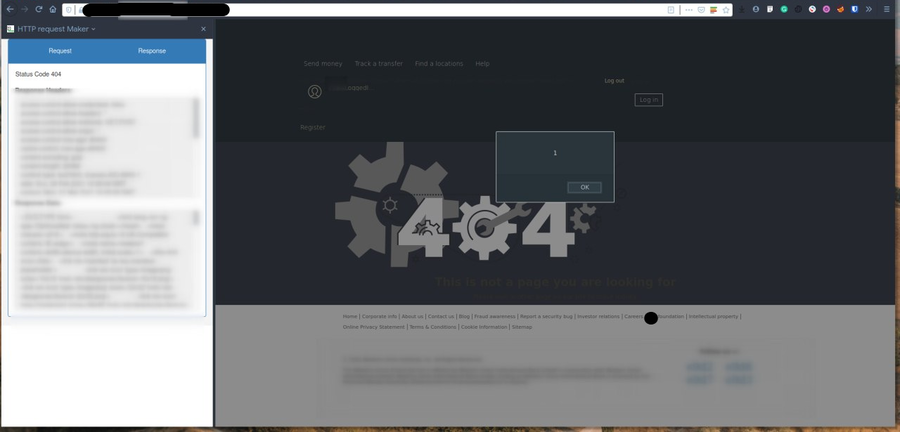
20 Aug 2023
Web Cache Deception leads to Cache Poisoning
Turning reflected vulnerabilities and self attacks into stored ones
read post →
17 Oct 2022
Reply Cyber Security Challenge 2022: Web200 Writeup
I took part to the Reply Cyber Security Challenge 2022, a CTF organized by Reply, with a team of friends from the University of Trento. This is the …
read post →